


Maintaining the right water conditions is one of the most important factors in keeping fish healthy, whether in home aquariums or commercial aquaculture systems. Among all water parameters, water hardness is often misunderstood or overlooked. Many fish health problems—poor growth, stress, low survival rates—can be traced back to improper hardness levels. If you encounter problems with breeding failure or lethargic fish, the first thing you should check are the GH and KH levels in the water.
This guide explains what water hardness is, what ranges are suitable for different fish, how to detect problems early, and how professional testing solutions help ensure stable aquatic environments.
Water hardness directly influences fish metabolism, osmoregulation, breeding success, and overall stress levels. If hardness is outside the ideal range, fish may struggle to regulate salts in their bodies, leading to weakened immunity or even mortality.
Unlike temperature or pH, hardness tends to change slowly, which makes problems harder to notice until damage has already occurred. This is especially critical for aquaculture facilities and breeding operations, where small water quality fluctuations can affect hundreds or thousands of fish at once.
Accurate testing and long-term monitoring are essential to prevent these hidden risks.
Water hardness generally refers to General Hardness (GH), which measures the concentration of dissolved calcium and magnesium ions. These minerals are essential for fish bone development, muscle function, and biological balance.
Carbonate Hardness (KH) measures bicarbonates and carbonates that help stabilize pH. While KH and GH are related, they serve different purposes and must be managed together for a stable aquatic system.
Hardness is commonly expressed in mg/L (ppm) as CaCO₃ or degrees of hardness (dGH).
No. pH measures acidity or alkalinity, while hardness measures mineral content. However, low hardness often leads to unstable pH, and excessively hard water can push pH upward. This interaction is why professional water testing always evaluates multiple parameters together rather than in isolation.
Most freshwater fish fall into three broad categories:
Water Hardness Tolerance Range for Aquarium Fish
Category | General Hardness (as CaCO₃) | Typical Fish Examples |
Soft Water | 0 – 75 mg/L | Discus, Neon Tetra, Cardinal Tetra, Ram Cichlid |
Moderate Hardness | 75 – 150 mg/L | Guppy, Angelfish, Platy, Corydoras Catfish |
Hard Water | 150 – 300 mg/L | African Cichlids (e.g., Mbuna), Mollies, Swordtails |
Maintaining the correct range supports proper breeding behavior, growth rates, and stress resistance.
In marine and brackish systems, mineral balance is naturally higher. Stability matters more than absolute hardness values. Sudden changes—even within acceptable ranges—can severely shock fish, making consistent monitoring critical.
White mineral deposits on tank surfaces
Reduced egg viability or breeding failure
Lethargic behavior and gill irritation
Poor skeletal development
Increased sensitivity to ammonia and nitrite
Rapid pH fluctuations causing chronic stress
By the time symptoms are visible, water conditions have often been unsuitable for weeks.
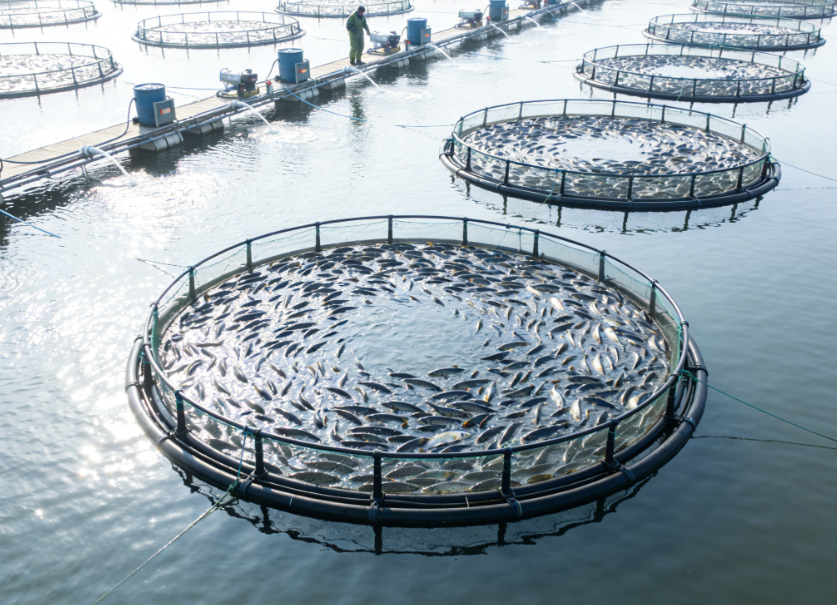
Managing water hardness becomes far more challenging in aquaculture farms, hatcheries, and commercial breeding systems where water sources vary seasonally and operational risks are high.
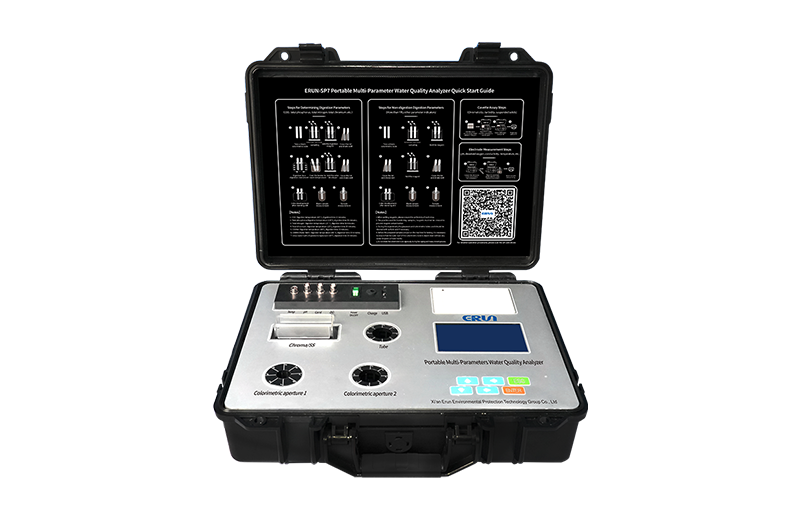
If you are looking for a reliable tool to test water hardness (GH/KH) and other key parameters, the ERUN-SP7 portable multi-parameter water quality tester is designed to address the practical problems faced by aquariums and aquaculture farms.
On-site hardness testing eliminates delays from off-site laboratory analysis
Customizable parameters allow operators to monitor hardness alongside ammonia nitrogen, nitrite, residual chlorine, total chlorine, turbidity, phosphate, sulfate, and metal ions
Rapid results support immediate corrective actions, reducing fish stress and loss
Expandable testing capabilities make the instrument adaptable as monitoring requirements grow
Instead of relying on guesswork or single-parameter tools, users gain a complete picture of water conditions, enabling precise control over aquatic environments and improving overall fish survival rates.
Water hardness plays a fundamental role in fish health, growth, and reproduction. Different species require different hardness ranges, and stability is just as important as accuracy. Relying on periodic checks or single-parameter tools is often not enough.
By implementing consistent, multi-parameter water testing and using professional solutions like ERUN-SP7, fish farmers and aquatic system managers can maintain optimal water quality, reduce operational risks, and ensure long-term success.