


Boilers play a critical role in industries such as power generation, manufacturing, food processing, and chemical production. However, many operators still ask an important question: Is a water test required on boilers?
The short answer is yes, and not testing boiler water regularly can lead to serious operational, safety, and cost issues.
In this article, we explain why boiler water testing is essential, what parameters should be monitored, and how portable water quality analyzers like ERUN-SP7 can simplify on-site testing.
Boiler water testing is not just a recommendation—it is a best practice and often a regulatory requirement. Poor water quality directly affects boiler efficiency, lifespan, and safety.
Untested or poorly treated boiler water can cause:
Scale buildup on heat transfer surfaces
Corrosion of pipes and boiler components
Foaming and carryover
Increased fuel consumption
Unexpected system shutdowns
Regular water testing helps identify problems early and ensures the boiler operates within safe chemical limits.
In many regions and industries, boiler water testing is required by standards or operating guidelines, even if not explicitly stated as a law.
Common references include:
Industrial boiler operation standards
Environmental and safety regulations
Insurance and equipment manufacturer requirements
Most boiler manufacturers specify mandatory water quality parameters to maintain warranty coverage. Failing to test and document water quality may void warranties and increase liability risks.
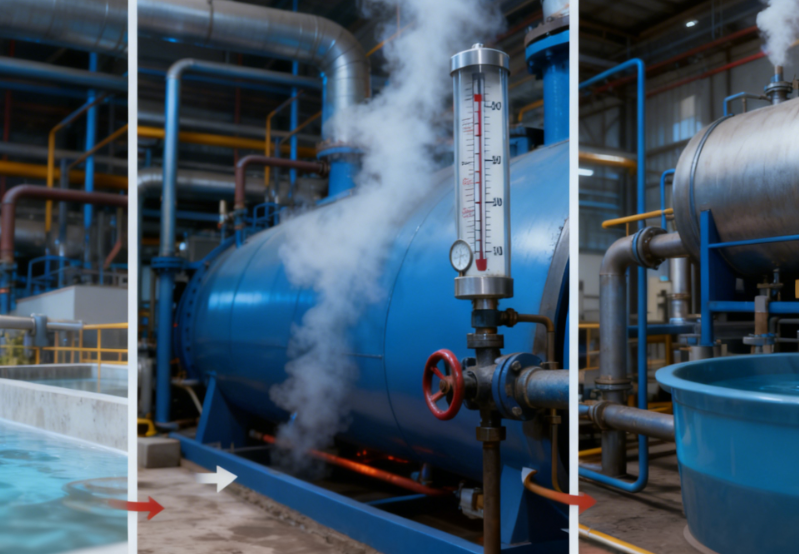
Skipping routine boiler water testing can lead to both short-term and long-term consequences.
Reduced heat transfer efficiency
Higher energy costs
Frequent maintenance and cleaning
Scale from high TDS or hardness
Corrosion caused by low pH or dissolved oxygen
Sludge accumulation from suspended solids
Unchecked water chemistry increases the risk of overheating, tube failure, and pressure-related accidents.
To maintain stable boiler operation, several water quality indicators must be monitored regularly.
High TDS leads to scaling and foaming. Controlling TDS helps maintain heat transfer efficiency and prevents carryover.
Proper pH prevents corrosion and scaling. Boiler water usually requires a slightly alkaline range.
Calcium and magnesium hardness cause scale formation, one of the most common boiler problems.
Excess chlorine accelerates corrosion, especially in feedwater systems.
These particles contribute to sludge formation and blockages.
Ammonia nitrogen, total nitrogen, and nitrate levels may indicate contamination or treatment inefficiencies.
Testing frequency depends on boiler type, operating pressure, and application.
General recommendations:
Daily: TDS, conductivity
Weekly: pH, hardness
Monthly: Nutrients, turbidity, additional parameters
Portable water quality testers make frequent testing much more practical, especially in industrial environments.
Traditional laboratory testing is accurate but often time-consuming and expensive. For real-time decision-making, on-site testing is the preferred approach.
This is where portable multi-parameter water quality detectors provide significant advantages:
Immediate results
No need to send samples to a lab
Suitable for harsh industrial environments
The ERUN-SP7 from Erun Environmental Protection is designed specifically for industrial and boiler water applications.
Portable, field-ready design
Supports multiple boiler-related parameters, including:
TDS
COD
Ammonia nitrogen
Total nitrogen
Turbidity
Residual chlorine
Hardness
Expandable test items based on user needs
Ideal for boiler feed water, blowdown water, and condensate testing
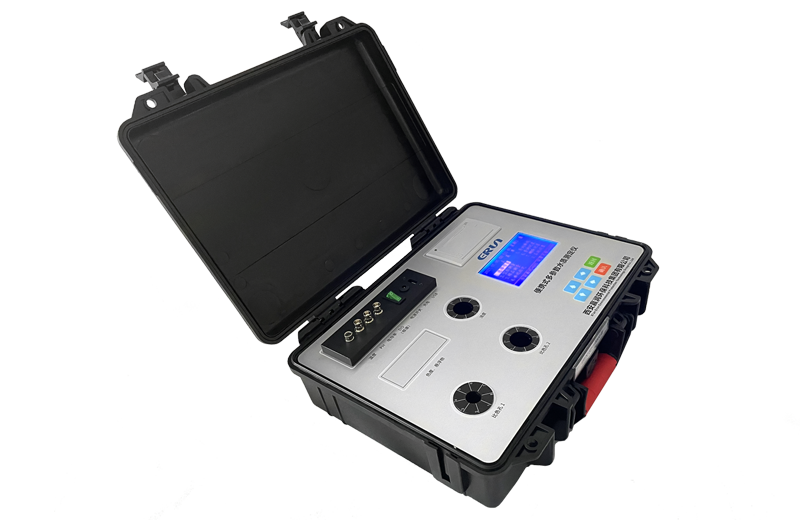
With ERUN-SP7, boiler operators can perform fast, accurate, and repeatable water testing without relying on external labs.
If you are managing boiler systems and need a reliable portable solution for boiler water testing, the ERUN-SP7 can help you improve efficiency and reduce operational risks.
Contact us today to get detailed specifications or request a quotation:
Email: [email protected]
WhatsApp:(+86-18189135710)
To ensure long-term boiler reliability:
Establish a regular water testing schedule
Record and trend test results
Adjust chemical treatment promptly
Use portable instruments for daily checks
Combine on-site testing with periodic lab verification
Consistent monitoring is far more cost-effective than repairing damaged boilers.
Yes—water testing is essential for boiler operation. It protects equipment, improves efficiency, ensures compliance, and reduces unexpected downtime.
Using a portable multi-parameter analyzer like ERUN-SP7 allows operators to test critical boiler water parameters anytime and anywhere, making water quality control simpler and more reliable.
Looking for a professional boiler water testing solution?
Email: [email protected]
WhatsApp:(+86-18189135710)
Our team will help you choose the right configuration for your boiler system.