


Ensuring wastewater meets regulatory discharge standards is a critical part of environmental protection, industrial compliance, and public health. Whether you manage a municipal treatment plant, run industrial operations, or work in environmental monitoring, understanding standard wastewater parameters—and how to measure them reliably—is essential.
In this article, we break down the key wastewater quality parameters, explain why each matters, and explore how advanced tools like the ERUN-SP7 multi-parameter water quality tester help streamline accurate testing in complex real-world applications.
“Standard wastewater parameters” refer to a set of measurable indicators that reflect the physical, chemical, and biological characteristics of wastewater. Regulatory bodies worldwide—such as the EPA, WHO, and local environmental agencies—require routine monitoring of these indicators to evaluate water pollution levels and ensure safe discharge or reuse.
Common parameters include COD, BOD, ammonia nitrogen, total phosphorus, total nitrogen, turbidity, heavy metals, residual chlorine, and more. Each parameter provides insight into pollution sources, treatment efficiency, and environmental impact. To meet evolving regulations and monitor increasingly complex wastewater compositions, industries rely on multi-parameter analyzers capable of accurate, rapid, and customizable testing.

COD measures the amount of oxygen required to oxidize organic matter in wastewater. High COD signals heavy organic pollution and inefficient treatment processes.
Ammonia originates from human waste, industrial discharge, and agricultural runoff. Excess levels cause eutrophication and toxicity to aquatic life, making accurate monitoring essential.
These nutrients accelerate algae growth and degrade ecosystems. Wastewater regulations typically set strict limits for both parameters due to their environmental impact.
Turbidity indicates suspended solids and impacts water clarity and microbial risk. It is also a key indicator for filtration performance.
Heavy metals are among the most regulated pollutants due to their toxicity and persistence. Wastewater facilities routinely monitor:
Copper (Cu)
Chromium (Cr)
Manganese (Mn)
Iron (Fe)
Zinc (Zn)
Aluminum (Al)
and others, depending on industrial processes.
These parameters help assess disinfection efficiency and prevent harmful by-products.
Because wastewater treatment often requires monitoring dozens of parameters simultaneously, a reliable, versatile instrument becomes essential—this is where the ERUN-SP7 stands out.
Accurate testing ensures:
Environmental agencies impose strict limits on pollutant discharge. Non-compliance can result in fines, shutdowns, and long-term ecological damage.
Excess nutrients and heavy metals harm aquatic organisms, contaminate groundwater, and degrade river and lake health.
Monitoring parameters such as COD, ammonia, turbidity, and metals enables operators to adjust treatment processes, chemical dosing, and filtration strategies in real time.
Many industries reuse treated wastewater for cooling, cleaning, irrigation, or production. Consistent testing ensures water meets safety specifications.
Sudden changes in parameters can signal equipment malfunction, chemical overdosing, or pollutant leaks.
To achieve all of this, operators require tools capable of handling diverse wastewater compositions—especially those with multiple inorganic salts and heavy metals.
The ERUN-SP7 portable multi-parameter water quality detector is engineered to meet modern wastewater monitoring requirements, especially in environments where pollutant types vary widely.
ERUN-SP7 can test:
COD
Ammonia nitrogen
Total phosphorus
Total nitrogen
Residual chlorine
Total chlorine
Chlorine dioxide
Turbidity
Color
Heavy metals (Cu, Cr, Mn, Fe, Zn, Al, Ni)
Inorganic ions (phosphate, sulfate, nitrite, hardness, cyanide, etc.)
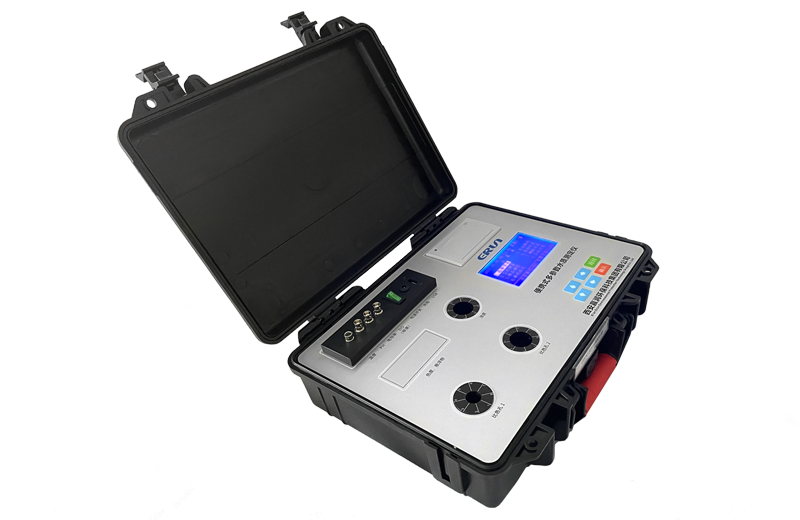
With support for dozens of parameters and expandable customization, the SP7 meets both standard regulatory requirements and industry-specific testing needs.
Using optical detection ensures:
High accuracy
Low interference
Good repeatability
Ideal for complex wastewater matrices.
Users can choose the exact parameters needed for:
Municipal wastewater monitoring
Industrial discharge testing
Laboratory analysis
Field sampling
Mining & metal processing effluent
Designed for both laboratory and field use, SP7 simplifies routine testing and supports rapid, reliable decision-making. Its versatility reduces the need for multiple instruments, lowering overall operational costs.
ERUN-SP7 monitors COD, ammonia, turbidity, and nutrient levels during each treatment stage. Operators use real-time data to adjust aeration, optimize dosing, and ensure compliance before discharge.
High concentrations of chrome, nickel, zinc, and copper require precise monitoring. The SP7 provides accurate heavy-metal detection to prevent toxic effluent release.
Organic load and nutrient levels fluctuate during production. The SP7 helps maintain consistent wastewater quality and supports reuse strategies.
Field teams rely on the portable design to measure multiple metal ions and pollutants during routine river and lake assessments.
As wastewater treatment standards grow stricter, comprehensive and accurate testing becomes indispensable. Understanding key parameters—COD, ammonia, phosphorus, turbidity, and heavy metals—is the first step. Having the right tools is the second.
The ERUN-SP7 multi-parameter water quality detector delivers the flexibility, accuracy, and advanced analytical capability needed for today’s wastewater monitoring demands. With customizable options, wide parameter coverage, and powerful optical technology, it supports industries and agencies in achieving compliance and protecting our environment.
If you’re looking to upgrade your wastewater testing efficiency, the ERUN-SP7 is a dependable solution.