


A drinking water quality monitoring system for export must carry CE, ISO 9001, and RoHS certifications to enter regulated markets. The ERUN-WQS-6022 meets all three requirements while delivering laboratory-grade accuracy for pH, turbidity, conductivity, and residual chlorine detection. It is the compliance-ready choice for distributors and water utilities worldwide.
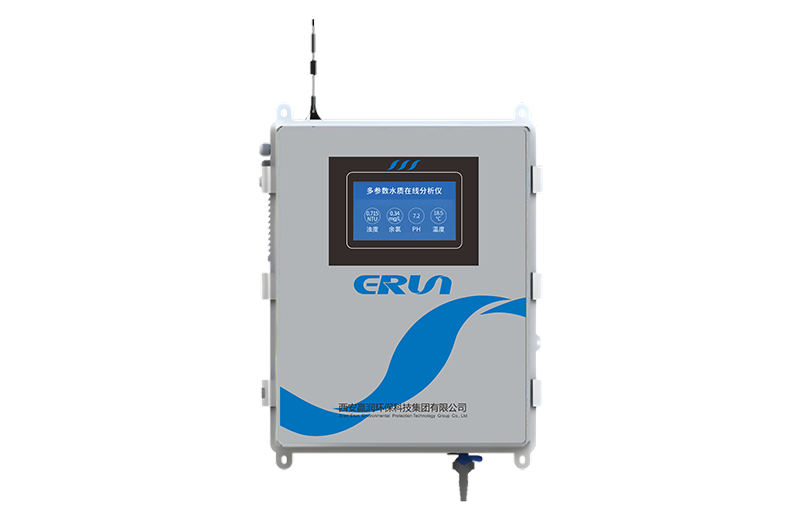
These four parameters are the global benchmark for drinking water safety and regulatory compliance.
The WHO Guidelines for Drinking-water Quality establish pH 6.5–8.5 as the optimal range, turbidity below 5 NTU for microbial safety, and residual chlorine at 0.2–0.5 mg/L after 30-minute contact. Conductivity, while not universally mandated, indicates dissolved mineral content and treatment effectiveness. A 2023 study in Ethiopia used portable monitoring to detect bacterial contamination in rural water sources, demonstrating how real-time parameter tracking prevents waterborne disease outbreaks.
Parameter | WHO Guideline | Risk if Exceeded |
|---|---|---|
pH | 6.5–8.5 | Pipe corrosion, reduced disinfection |
Turbidity | ≤5 NTU | Pathogen harborage |
Residual Chlorine | 0.2–0.5 mg/L | Microbial regrowth |
Conductivity/TDS | ≤600 mg/L TDS | Taste issues, contamination indicator |
Each certification addresses a distinct export barrier: market access, manufacturing reliability, and environmental compliance.
CE certification confirms the equipment meets EU safety, health, and electromagnetic compatibility directives—without it, customs clearance in Europe is impossible. ISO 9001 verifies a documented quality management system governing everything from component sourcing to final testing. RoHS compliance proves the device contains no restricted hazardous substances like lead or mercury. Together, these three certifications reduce importer risk, simplify regulatory audits, and accelerate end-user acceptance.
The ERUN-WQS-6022 integrates multi-parameter detection into a single wall-mounted platform, reducing installation complexity and total ownership cost.
The system simultaneously monitors turbidity (0–20 NTU with 0.001 NTU resolution), disinfectants including residual chlorine (0–5 mg/L), pH (0–14), temperature, dissolved oxygen, ORP, conductivity (0–20000 µS/cm), and TDS. This multi-parameter capability means one device replaces four or five separate analyzers, cutting procurement, wiring, and maintenance expenses. For export distributors, it simplifies inventory management and strengthens proposal competitiveness.
The ERUN-WQS-6022 features an integrated design with unified inlet/outlet ports, a 7-inch touch screen, and wall-mounting capability that prevents water damage and ground moisture ingress. Data transmission uses standard RS485 Modbus-RTU protocol with 4G cloud connectivity, enabling seamless integration with existing SCADA systems and remote monitoring platforms.
Q: What certifications are required to export a drinking water quality monitoring system to the EU?
A: CE (covering EMC and LVD directives) is mandatory. RoHS compliance is also required. If the device includes wireless transmission, RED certification applies. The ERUN-WQS-6022 carries CE, RoHS, and ISO 9001 certifications.
Q: Can one system monitor pH, turbidity, conductivity, and residual chlorine simultaneously?
A: Yes. Multi-parameter platforms like the ERUN-WQS-6022 use independent sensor channels to continuously measure all four parameters plus temperature, ORP, and TDS in real time.
Q: How does ISO 9001 certification benefit importers?
A: ISO 9001 ensures manufacturing consistency, reducing batch-to-batch quality variance. It provides auditable supplier documentation, streamlining procurement compliance and vendor qualification processes.
ERUN Environmental—Delivering certified, export-ready drinking water monitoring solutions trusted by utilities and distributors across 50+ countries.