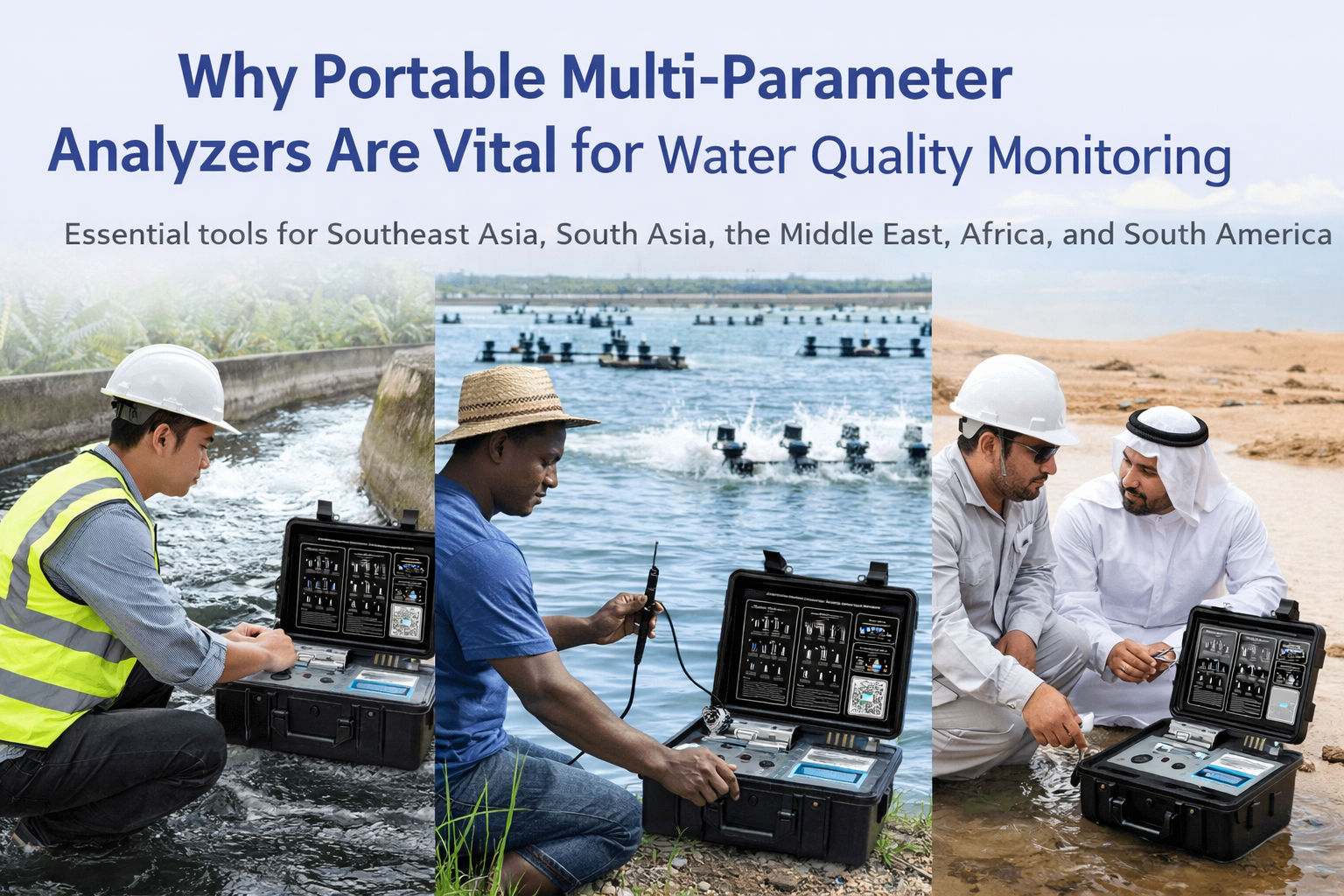
In regions like Southeast Asia, South Asia, the Middle East, Africa, and South America, where infrastructure gaps often hinder traditional lab-based water testing, portable multi-parameter water quality analyzers have become indispensable tools for ensuring water safety and supporting key industries. Designed for flexibility and rapid on-site assessment, these devices empower professionals across sectors—from environmental regulators to aquaculture farmers—to obtain accurate data in minutes, no matter the location.
Why Portable Multi-Parameter Analyzers?
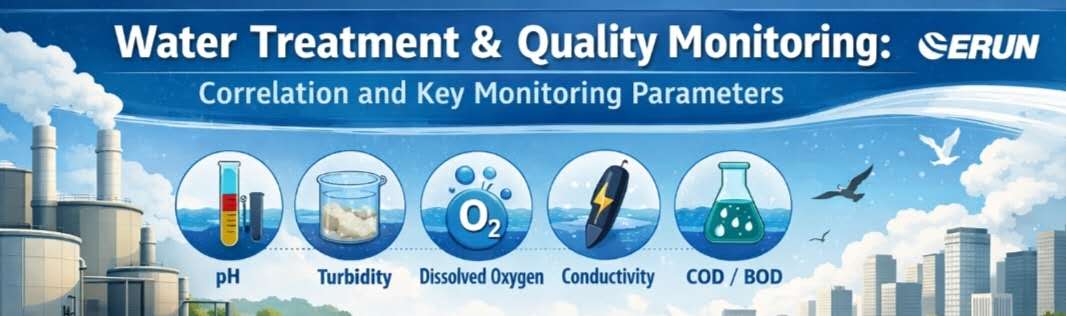
Unlike fixed-laboratory setups, portable multi-parameter analyzers bring the lab to the field. They measure critical parameters such as pH, electrical conductivity (TDS), turbidity, dissolved oxygen (DO), and temperature in a single, compact device. This all-in-one functionality eliminates the need for multiple instruments, saving time, reducing costs, and enabling real-time decision-making. For example, an environmental inspector in rural Vietnam can quickly test a stream’s water quality during a compliance check, while a Brazilian shrimp farmer can monitor dissolved oxygen levels in their pond to prevent losses.
Target Markets & Core Drivers
Key markets for these devices include India, Indonesia, Vietnam, Brazil, and Nigeria—regions characterized by:
Agricultural & Aquaculture Dependence: In Southeast Asia, where aquaculture drives economic growth, portable analyzers help farmers optimize water conditions, boost yields, and minimize disease risks. Models like the ERUN-SP9, ERUN-SP7, ERUN-SP4 (for aquaculture), and ERUN-SP5 are purpose-built for this use case.
Infrastructure Challenges: Areas with limited access to full-scale labs rely on portable analyzers for emergency testing (e.g., post-flood water safety checks) and routine inspections (e.g., municipal water supply monitoring).
Regulatory Compliance: Governments and NGOs increasingly mandate water quality monitoring for public health. Portable devices enable cost-effective, frequent sampling to meet these standards.
Applications Across Industries
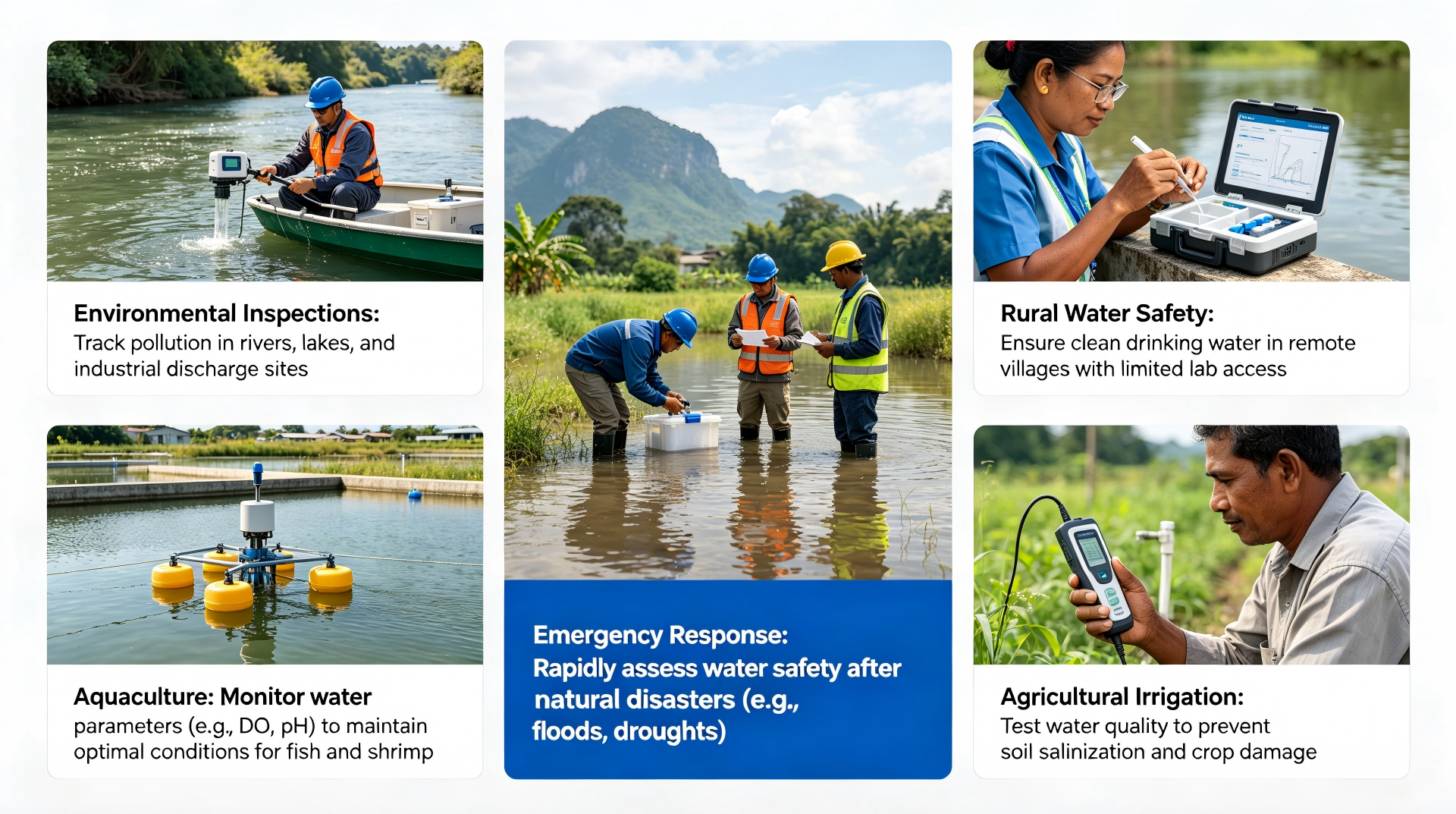
Environmental Inspections: Track pollution in rivers, lakes, and industrial discharge sites.
Rural Water Safety: Ensure clean drinking water in remote villages with limited lab access.
Aquaculture: Monitor water parameters (e.g., DO, pH) to maintain optimal conditions for fish and shrimp.
Agricultural Irrigation: Test water quality to prevent soil salinization and crop damage.
Emergency Response: Rapidly assess water safety after natural disasters (e.g., floods, droughts).
How ERUN’s Portable Analyzers Stand Out
Precision & Reliability: High-accuracy sensors ensure consistent results, even in harsh environments.
User-Friendly Design: Intuitive interfaces and quick calibration make them accessible to non-experts.
Durability: Built to withstand field conditions (dust, moisture, drops).
Comprehensive Support: Localized technical assistance and training for emerging markets.
Conclusion
For industries and governments in emerging markets, these handheld devices are more than just tools—they’re essential partners in safeguarding public health, boosting agricultural productivity, and protecting ecosystems. By choosing a device like ERUN’s portable series, users gain the speed, accuracy,d flexibility needed an to thrive in resource-constrained environments.
Ready to elevate your on-site water quality testing? Explore ERUN’s portable multi-parameter analyzers today and experience the difference of real-time, reliable data at your fingertips.