


Dissolved oxygen (DO) is one of the most critical parameters in water quality assessment. It directly affects aquatic life, wastewater treatment efficiency, and industrial process control. Whether you are monitoring a river, a fish farm, or an activated sludge tank, reliable DO data is non-negotiable.
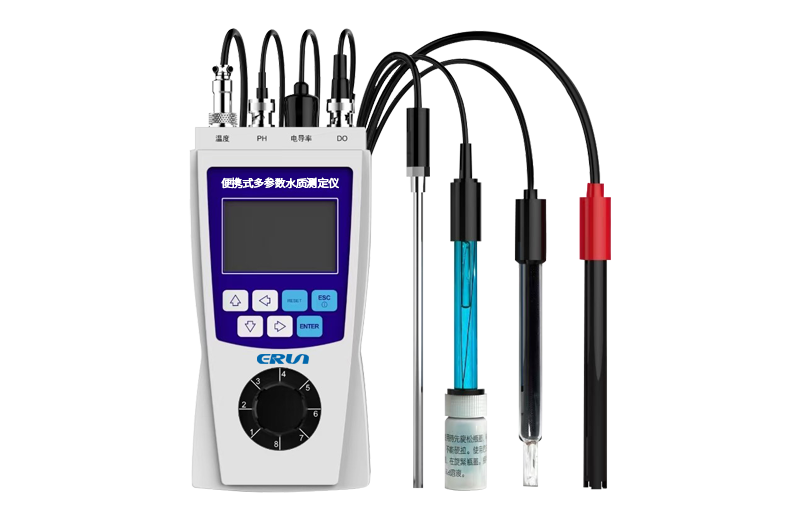
Yet, many field professionals still rely on lab-bound equipment or single-parameter devices. This slows down decision-making and increases costs. The solution? A portable, multiparameter instrument that delivers lab-grade DO readings on-site — like the ERUN-SP4 Portable Multiparameter Water Quality Meter.
Low DO levels can indicate pollution, algal blooms, or aeration failure. In aquaculture, DO below 3 mg/L can stress or kill fish. In wastewater treatment, insufficient DO reduces biological nutrient removal. For environmental compliance, regular DO monitoring is often required by regulations such as the EU Water Framework Directive or local EPA rules.
Therefore, having a fast, accurate, and portable DO meter is essential for:
Field ecologists conducting surface water surveys
Aquaculture farm operators managing pond health
WWTP technicians checking aeration basin performance
Industrial facilities monitoring effluent quality
The ERUN-SP4 is not just a dissolved oxygen meter — it is a complete portable water quality laboratory. Designed by Xi’an Yingrun Environmental Protection Technology Group, this handheld device supports over 70 parameters, including DO, pH, ORP, conductivity, turbidity, and heavy metals. For DO measurement, it offers two methods:
Range: 0.1 – 10.0 mg/L
Accuracy: ±0.1 mg/L or ±5%
Ideal for spot checks where no electrode maintenance is desired.
Range: 0 – 20.0 mg/L
Accuracy: ±0.2 mg/L
Suitable for continuous monitoring and high-accuracy field work.
This dual-option flexibility ensures you always have a working DO measurement method, even if reagents run out or electrodes need calibration.